post

Article about Romanian Scottish School Trip in Green Report

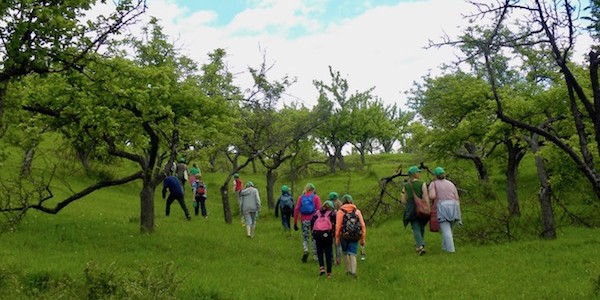
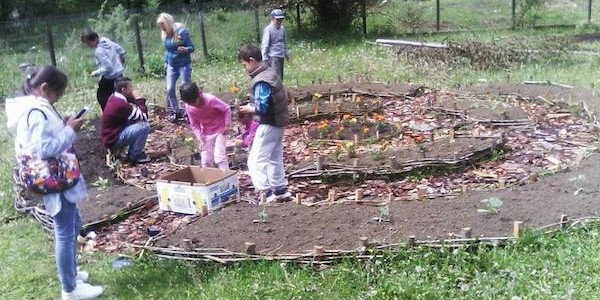
From May 15- 19, the Neohumanist Education Association hosted an exchange experience for 30 children from Gatehouse and Tynholm Scotland, to learn more about permaculture and experience Romanian traditions and agriculture. The project was part of the “Children in Permaculture” project, funded by Erasmus Plus.

Ana Racheleanu published an article about the experience in Green Report.

aen CIP erasmus plus logos

post

YiP: Youth in Permaculture begins

Youth In Permacultue (YIP) is a new initiative to support and empower young people to create resilient, fulfilling and fun lives inspired by permaculture.  Didi represented AEN at the first visioning meeting in Spain with organisations from many different countries in Europe and beyond.

Encouraged by Children in Permaculture (CIP), young people involved in permaculture and leaders from the permaculture community gathered, creating a team from over eight countries to begin this exciting project.

We have a web page with resources, tools, opportunities, networks, youth projects and voices. We’ve begun the planning stage of organizing events, activities, workshops and exchange programs and will send out surveys to people interested in supporting this project. For more information visit www.youthinpermaculture.org

What is sociocracy?

Sociocracy is an easy to learn, systematic process for facilitating group dynamics that encourages full participation, shared responsibility and greater efficiency in decision making.  It is based on the idea that each of us has a valuable perspective, and that the best decisions find ways to include everyone in the process, thus drawing on the collective wisdom of the whole group. Sociocracy has been effectively utilized to run everything from international Erasmus projects, to eco-villages to an electric engineering company. Find out more here.

post

Children from an Afterschool in Buzau county Romania share agricultural traditions with 19 Scottish School Children

On May 14th, 19 school children aged 11-12 from the Gatehouse School in Scotland will be boarding an airplane to meet the children of Fountain of Hope Afterschool Center, in Panatau, Buzau county. The Romanian children will introduce the Scottish students to Romanian village life and have a chance to share their specialized knowledge about traditional agriculture and sustainable practices that has been forgotten about in countries used to industrialized agriculture. The exchange experience is organised on the Romanian level by Asociatia Educatie Neoumanista, one of 5 international partner organisations within the “Children in Permaculture” Project, an Erasmus plus Strategic Project financed by the EU.

The visiting children will have the opportunity to experience and appreciate the beautiful richness of Romanian rural life. This is all the more relevant at a time when many young people all over the world are leaving rural villages that have maintained a more sustainable eco-friendly lifestyle for hundreds of years and are migrating to industrialized cities. The exchange aims to help both the Romanian and Scottish children to value rural lifestyle. Permaculture is a design system that is inspired by traditional agricultural practices that respect nature, and is attracting a new, younger generation all over the world towards sustainable rural living. It is guided by three main ethics: People care, Earth care and Fair share. The Children in Permaculture project is designing curriculum, and practical resources to bring ecological education to life in schools and support the new generation in developing a holistic connection and deep love and appreciation for nature. This is essential for creating hopeful futures in face of increasing environmental crisis.

Read More

post

Mindfulness, children and nature

Discovering the world through a screen

In our increasingly sophisticated and technologically driven world, many children are primarily exposed to discovering the world through the screen of a tablet, TV or computer.  They become habituated to these highly concentrated doses of information and their young minds readily adapt and crave greater and greater stimulation. It is then no wonder that it becomes difficult for them to sit quietly, to have long periods of concentrated attention.  We adults complain that ADHD has reached epidemic proportions, yet if we observe ourselves, many of us have become accustomed to being constantly available on our cell-phones, filling up the spaces of our lives while we wait in line, drive in the car, or go for a walk with checking email, messenger, Facebook, or making calls.  How much calm, quiet spaciousness do we grant our own minds? How much do we flit rapidly from task to task?
Mindful time in nature is both antidote and medicine for this condition. The natural world operates  in spontaneous harmony with its Divine source and thus exudes peace, beauty and truth from its very essence. Poets and artists throughout the ages find metaphor and inspiration in the natural world as it is a pure mirror of subtle, spiritual truth. Only human beings have the ability to choose consciously whether or not to act in harmony with their Divine nature or to ignore it. The rest of Nature is on auto-pilot.  As a zen teacher I heard speak once said, “Human beings are number one bad animal because human beings don’t know what human being’s job is.”

Read More

post

Building Nature Awareness Skills With Children, Parents and Staff

Workshop for Parents and Teachers

When:

September 21, Poieni, jud Buzau at the AMURTEL Social Garden, 15-17 hrs.

September 23, Morningstar Center, Str. Almas 16 Sector 1 Bucharest 18.30-20.30 hrs.


Summary:

discoverWe will look at ways to nurture and reinforce children’s innate sense of wonder and fascination with nature, and how best to rekindle it with adults so they can model and integrate nature awareness and appreciation in their daily work with children. Inspired by Richard Louv’s book, “Last Child in the Woods,” we will examine the needs for outdoor time and experiences with nature for healthy development in children of all ages. Practices to maximize outdoor time and bring nature indoors, in order to enhance physical, social-emotional, and cognitive growth will also be explored.

Objectives:

Participants will:

  • explore and practice approaches, strategies and tools that promote, nurture and reinforce children’s connection with and understanding of the natural world
  • examine and apply principles of developmentally appropriate learning environments, both inside and out, that encourage a sense of wonder
  • select and apply approaches that promote nature awareness with parents and staff

About the presenter:

Ruai Gregory, M.A., Human Development, has worked as an Early Childhood Educator since 1976. Her roles have included teacher, consultant, director, early intervention specialist, parent educator and college professor. She currently teaches Early Childhood Education at Blue Mountain Community College in northeast Oregon, USA, and is a Parent/Provider Consultant for Child Care Resource and Referral at Umatilla/Morrow Head Start. Along with her husband, Forest Gregory, she has run “Harmony Home Nature Camp” since 2000.

This course is organized by:
NEOHUMANIST EDUCATION ASSOCIATION
AMURTEL ROMANIA

post

Neohumanist Education Training “Child Friendly Spaces” in Lebanon

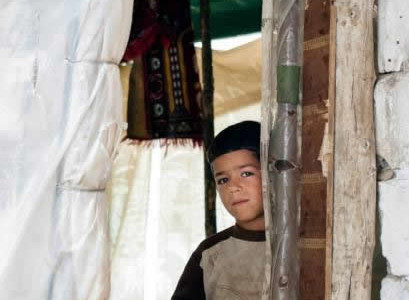
Gurukula1The training focused mostly on understanding how traumatic stress effects children and their behavior, as well as practical methods for assisting the children in integrating into the child friendly space. The CFS is conceived of as a temporary, intermediate step to help children that have either never been in, or have been excluded from the mainstream educational system because of their refugee status. It helps children “normalize” after so many experiences of disruption, stress and instability. It also gives them a safe space to learn how to express themselves, to receive emotional support and coaching, as well as to gain practical skills for school readiness. One of the most important elements of the CFS, however, is to have fun and play!

It was chilling to see the drawings on the walls of the therapy room made by some of the children. There were so many vivid drawings of soldiers with guns, bullets, blood and dead bodies. These children have seen unspeakable things. And yet, they are still children and need the same opportunities all children need to grow and develop and heal.

Gurukula2Didi introduced yoga for children as a way to ground and learn to trigger relaxation responses to turn off the hyper vigilant stress system that traumatic situations leave constantly on alert. She also introduced story-massage, therapeutic story telling, persona dolls and lots of games. The group was particularly creative and invented many songs in Arabic, based on classic Neohumanist songs to use during quiet time, transitions, etc.

Since the training, the facilitators have introduced a morning “Circle of Love”, and use the songs that they created for the activities. They use story telling extensively and have already created several arabic persona dolls, which they plan to use to address sensitive issues around bullying and discrimination.

Here is a therapeutic story that Didi wrote for the training and reflects, through metaphor, the experience of these children:

Uprooted:

A tiny tomato seed was planted in the warm, dark earth inside of a safe greenhouse. Soon, a tiny green shoot had sprouted through the earth, and began reaching up towards the sunlight. It grew, and grew…And then one day, a shovel came, and roughly dug into the earth next to her and in one sudden lurching movement, the tomato seedling was dizzily free of its familiar bed of earth. A small chunk of earth clung to her tiny hair like roots. Several of the roots stung as they had been severed when the seedling had been torn from the ground.

The seedling was crowded into a tray with many other little plants. They could barely breathe. And then a motor hummed, and suddenly the earth was moving underneath then and rumbling and jostling. They fell over onto one another, some of their fragile leaves snapped off.

A long time passed, and the little seedling just waited, huddled together. Most mornings they received a brief shower of water from above. But a long time days passed without  water…they were so thirsty. The little plants couldn’t keep growing towards the sun. They began to wilt..some of the leaves were turning yellow. They cried out for water – they wanted to grow again.

At last their cries were heard. A concerned voice “Oh – these plants need to get into the ground!!! Who left them here?”

The little seedling again found herself flying through the air, and then she was settled into a carefully prepared hole, already soaked with water.  The half covered roots were then snugly covered up with earth. The little seedling was happy – but so exhausted that she just slumped over onto the earth. She didn’t even have the strength to stand up straight – especially with the rays of sun beating down as the sun rose high into the sky.

There were other tomato plants nearby – strong and tall. They seemed to be laughing at the sadly wilted newcomers. Already they had yellow flowers brightly decorating their branches -that would turn into red tomatoes in a few more weeks.

That night when the hot sun set behind the stony mountains, a cool moon rose in the sky and gently shone its healing light on the little tomato seedling . The moon told the seedling – you are safe now and can let your roots stretch into the ground again.  I will send morning dew for you to drink and grow strong, and soon you will catch up with the other plants and you too will have beautiful yellow flowers and lovely juicy tomatoes!”

The next morning, it wasn’t easy and the little seedling had to struggle, but already she was standing up a bit straighter. The farmer came and planted a strong pole next to her and gently tied bits of string to her stems to support her to grow nice and tall. Though she was smaller than the others and had to work hard to grow, day by day the little plant was climbing higher and higher thanks to the pole. The farmer took extra care to give her steady showers of rain and a little bit of extra fertile black manure so she could catch up.  Soon the tomato plant was doing what tomato plants do – stretching her leaves up to the sun and growing, growing, growing.

Before long – yellow buds unfurled on its branches. In a few more weeks, when the flowers had dried up, they left behind small, round, green knobs that began to swell every day. The green tomatoes warmed in the summer sunshine, and began blushing into red.  The little tomato seedling  had grown into a tall, strong tomato plant just like the other plants, and offered its juicy, sweet, red tomatoes to the farmer.
post

Excellent resources for promoting inclusive practices

The following resources are helpful for early-childhood education teacher training. They can be used to stimulate discussion and critical thinking and some contain practical examples for classroom use:

Anti-bias education sparksAnti-bias Education for Young Children and Ourselves

by Louise Derman Sparks and Julie Olsen Edwards

This is a fundamental “textbook” in diversity awareness for early childhood education.  It can be purchased from the NAEYC website, and you can also download the first chapter for free at this link.


kids like us whitney

Kids like Us

by Trisha Whitney

This book introduces the “persona doll method” – an excellent tool for stimulating discussion in the classroom about issues such as stereotyping, exclusion, diversity etc.  The teacher creates a realistic biography for a special handmade doll that is not used as a typical toy – but rather is introduced into the classroom as a friend and brought into special circle discussions by the teacher on a regular basis. Care is taken to include different aspects of diversity relevant to the children in the group when formulating the biography. The book gives hundreds of practical examples, directly from the classroom, of facilitating children to identify emotions, solve problems and increase empathy.  The book can be bought online at Amazon.  You can also learn more about this method, and order dolls from the Persona Dolls Training website.  They also have a rich resource section, with many useful books and DVDs. In particular, the DVD “Storytelling to make a Difference”  shows many examples of utilizing the persona doll method in the classroom, with feedback from the teachers as well.

Screen Shot 2015-07-13 at 00.16.56

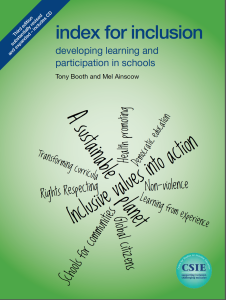
Index for Inclusion

by Tony Booth and Mel Ainscow

The Index for Inclusion by Tony Booth and Mel Ainsow is concerned with promoting values-led development for schools, kindergarten and other educational settings. It sees inclusion broadly as concerned with putting inclusive values into action and through its 70 indicators and 2,000 questions relates its values framework to the fine detail of settings and the activities within them. The most recent edition has been written by Tony Booth and can be obtained by writing to him at tonybooth46@gmail.com. More information is available from the Index for Inclusion Network at indexforinclusion.org 

This comprehensive resource offers an important tool for critical reflection to school communities that are seeking to improve their inclusiveness.  It offers guidance in developing an inclusive school development plan,  and offers a list of indicators that help to paint a clear picture of what an optimally inclusive environment would look like. It is designed to stimulate discussion between stakeholders rather than as a checklist.

Recent movements, such as “Gross National Happiness”, or the “Happy Planet Index” have shown the importance of “measuring what matters.”  The process of doing so, helps us to define more clearly the future we are seeking to create.  Clear goals and clear vision lead to better outcomes.

Ted Talk: The Happy Planet Index

Nik Marks

This Ted Talk, by Nic Marks further elaborates on the importance of having positive visions of change – with very interesting implications for the ecological movement as well. He begins his talk by saying that Martin Luther King, when inspiring the civil rights movement, did not start out his famous speech with “I have a nightmare” but rather with “I have a dream.”


Screen Shot 2015-07-13 at 01.10.16More and more people are becoming aware of the need to emphasize well-being in early childhood education, rather than only looking at standard cognitive developmental benchmarks. This organization “Learning for Well-Being” shares  many Neohumanist values.

“A Class Divided”

Jane Elliot

The following video, “A Class Divided” is a documentary about a controversial experiment that a 2nd grade teacher, Jane Elliot,  did in 1968, immediately after the shooting of Martin Luther King, in order to sensitize her students to racism by creating an experience of discrimination. The students were interviewed many years later as adults, and all of them felt it was an important life-changing experience that they wish more children could have so that they could learn to empathize with people that experience discrimination.

Videos by Proinfirmis

The Swiss organization, Proinfirmis, has produced several touching videos designed to help shift the way people view those with disabilities:

post

Acceptarea diversitatii – cheia unui viitor ingaduitorEmbracing diversity – key for a compassionate future

The following article is based on a talk given by Didi Devapriya Deshaies (president of AEN) during the panel discussion: “How can we transform our educational system to help construct a compassionate and more livable future?”  July 11th, AB Tech Campus, Asheville, NC:
Since last year, I have been part of a project in Bucharest to train 100 kindergarten teachers in the “We all Have a Story Project”, which was designed to awaken positive attitudes towards diversity in both teachers and kindergarten children. The project is financed by the EEA Grants in the “NGO Fund” program and is  is a partnership between the Centre for Partnership and Equality (CPE), AMURTEL Romania and Romano Butiq.

exclusionDuring one of the training sessions, we led a simple exercise. The teachers gathered in a circle, and while their eyes were closed, we placed colored post-it notes on their heads. Most received yellow post-it notes while just a few of them received green ones. When they opened their eyes, they could see the post-it notes on the heads of the others, but they could not see their own. At first they just walked through the room, greeting each other and giggling at the oddness of having something stuck to their head. However, we then told them to avoid those wearing green postit notes as they were not their friends. The change in the atmosphere of the room was palpable and a certain tension began rising. As everyone began to ignore and exclude those with green, the giggling took on a nervous quality, as nobody was really sure what color they themselves had. Eye contact became insecure, and the question “are the others excluding me?” was hanging in the air. Read More